Signs of Squirrels in the Attic: What Huntsville Homeowners Need to Know Before It’s Too Late
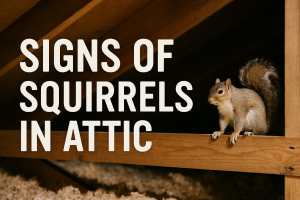
Is something scratching overhead while you’re trying to relax? If you’re hearing noises in the ceiling or spotting strange droppings near your vents, you might not be imagining it. Squirrels are one of the most common attic invaders in Huntsville—and they rarely come alone.
Your attic is warm, safe, and full of nesting potential—exactly what a mother squirrel is looking for. But while they might look cute from a distance, the damage they can cause is anything but charming. Left unchecked, a squirrel invasion can quickly lead to torn insulation, chewed wires, and even house fires.
Knowing the early signs of squirrels in the attic can help you avoid chewed wires, ruined insulation, costly repairs — and the stress that comes with it.
Let’s walk through the most common signs a squirrel may be in your attic—and what you should do next before the damage gets worse.
Clear Signs You Have Squirrels in Your Attic
Squirrels are not exactly subtle when they move in. But because most attic activity happens early in the morning or late in the afternoon, their presence can go unnoticed for weeks—until the damage is done.
Here are the most common signs homeowners in Huntsville report when squirrels have taken over their attic space:
-
Scratching and scurrying noises: If you hear fast-paced movement, especially around dawn or dusk, squirrels are likely running through your attic joists or along ductwork.
-
Chewed wires and wood: Squirrels have strong teeth and will gnaw on anything—electrical wires, wooden beams, and even plumbing lines—putting your home at serious risk.
-
Insulation trails or nests: Look for shredded insulation piled into corners or flattened paths, which can indicate nesting or regular squirrel traffic.
-
Foul smells from urine and droppings: Squirrel waste builds up quickly, leaving behind strong odors and potentially harmful bacteria.
-
Exterior entry points: Chewed holes near your roofline, soffits, or vents are often entry or exit points for squirrels and other rodents.
If you’ve noticed any of these symptoms, it’s time to take action. Even if the noises have stopped, squirrels may have left behind enough damage to invite new pests or mold.
Why Squirrels Love Your Attic (and What Makes Huntsville a Hotspot)
Squirrels are resourceful, agile climbers who are always on the hunt for:
- Shelter from predators
- Warmth during cooler nights
- Safe places to raise their young
Your attic? It checks all the boxes.
Especially if:
- You live near wooded areas like Monte Sano, Hampton Cove, or Jones Valley
- Your home is over 10 years old
- You’ve recently had roofing, gutter, or siding repairs
- You store bird seed, pet food, or firewood nearby
Squirrels are more than just backyard visitors. They see your home as prime real estate.
Why Huntsville Homes Are at Risk for Squirrel Infestations
Huntsville’s unique mix of wooded neighborhoods, aging architecture, and seasonal temperature swings creates a perfect environment for squirrels to thrive—and invade.
Here’s why local homes are especially vulnerable:
-
Mature trees close to rooftops: In areas like Blossomwood, Jones Valley, and Five Points, overhanging limbs act like highways straight into your attic.
-
Older homes with roof gaps: Many historic or unrenovated houses in Huntsville have worn fascia boards, uncapped vents, or loose shingles—ideal entry points for curious squirrels.
-
Seasonal shifts in fall and spring: During mating and nesting seasons, squirrels actively search for safe, insulated areas. Your attic checks all the boxes.
-
High squirrel populations: North Alabama is home to large populations of both gray and fox squirrels, meaning more competition for space and a greater chance of invasion.
If you live in a neighborhood with tree coverage and haven’t had your attic inspected recently, you could already be sharing space with unwanted guests.
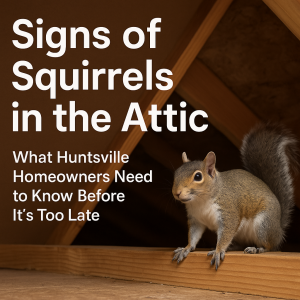
Top Signs You Might Have Squirrels in the Attic
You don’t have to see a squirrel to know one’s taken up residence. Here are the most common (and urgent) red flags:
1. Scratching or Scampering Sounds
The #1 complaint we hear from Huntsville homeowners?
“Something’s running in my ceiling at dawn.”
Squirrels are active during the day — especially early morning and around sunset. You’ll often hear:
- Scratching in ceiling corners
- Quick footsteps or skittering above your head
- Sounds that start around 5–6AM and stop mid-day
2. Chewed Wood, Wires, or Entry Points
Squirrels chew constantly to keep their teeth sharp. That means:
- Damaged soffits, shingles, or fascia boards
- Frayed electrical wiring (a major fire hazard!)
- Chew marks around vents or attic openings
If you’ve had electrical flickers, odd smells, or chewing around your roofline — that’s a solid clue.
3. Insulation That Looks Disturbed or Flattened
In most squirrel-infested attics, we find:
- Flattened insulation where they nest
- Tunnels or pathways through blown-in insulation
- Nesting materials like leaves, twigs, and even cardboard
This impacts your energy bills and your indoor air quality.
4. Droppings in the Attic or Garage
Squirrel droppings are small, oblong, and dark — often mistaken for mouse or rat droppings.
If you spot droppings near insulation or corners, that’s a red flag.
5. Nests Near Vents, Chimneys, or Eaves
From the outside, look for:
- Clumps of debris tucked in gutters or along the roofline
- Twigs and leaves sticking out of vents
- Noisy squirrel activity around your roof early in the morning
These are signs that squirrels are entering — or trying to.
6. Unusual Odors
Urine, droppings, or dead animals can create a strong musky smell in attics or even vents.
If your attic suddenly smells “off,” it’s time to take a closer look.
7. Your Dog or Cat is Acting Weird
If your pet is:
- Barking or growling at walls
- Scratching at garage doors or ceilings
- Constantly staring at a particular corner
… they probably hear something you don’t.
How to Confirm It’s a Squirrel (Not a Rat, Raccoon, or Bird)
Not all attic noises mean squirrels—so how can you tell for sure? While many critters share your attic space, squirrels have some very specific calling cards.
Here’s how to distinguish squirrels from other common attic invaders:
-
Time of day matters: Squirrels are diurnal, meaning they’re most active early in the morning and late in the afternoon. Nocturnal noises likely point to raccoons or rats.
-
Speed and sound of movement: Squirrels move fast and erratically. If you hear quick scurrying or light thumping, especially along the ceiling edges, it’s likely them.
-
Dropping size and placement: Squirrel droppings are slightly larger than rat droppings and are often found near entry points or nesting areas.
-
Visual confirmation: If you’re able to spot a squirrel entering through a hole under your eaves or running along utility lines and disappearing into the roof—there’s your answer.
-
Gnaw marks and debris: Unlike birds or bats, squirrels leave visible tooth marks and may drag outside debris into the attic to build nests.
Still unsure? A professional inspection can verify the species and recommend the safest and most effective next step for removal.
Why It’s a Bigger Deal Than You Think
Squirrels may be small, but the damage they do can be big:
- Fire risk: Chewed wires spark attic fires every year
- Insulation loss: Reduces energy efficiency
- Structural damage: They rip into wood, shingles, and vents
- Health risks: Droppings can carry bacteria or parasites
- Breeding cycle: If they nest, you’ll have a family of squirrels in no time
And once they’re inside? They’re hard to evict — especially without the right tools and training.
Huntsville Homeowners at Highest Risk
You’re more likely to deal with attic squirrels if:
- 🏡 You live in a home over 15 years old
- 🧒 You’ve got kids or pets
- 🌳 Your backyard backs up to trees or open land
- 🔌 You’ve had flickering lights or power issues
- 📦 You store boxes or holiday items in the attic
- 🛠️ You’ve recently had roof or gutter repairs
- 👂 You’re home more during the day (remote work or retirement)
- 💡 You’ve noticed odd smells or increased energy bills
- 🐕 Your dog has been barking at the ceiling or walls
Homes in South Huntsville, Blossomwood, and the Cove area are especially vulnerable — and squirrels are known to return year after year if not properly excluded.
Why DIY Squirrel Removal Often Backfires
It’s tempting to grab a trap from the hardware store or seal up a hole with foam and call it a day—but squirrel removal is more complicated than it seems. In fact, most DIY solutions end up costing more time, money, and frustration in the long run.
Here’s why:
-
You might trap them inside: Sealing up entry points without confirming all squirrels are out can lead to dead animals, horrible odors, and even frantic chewing through new areas to escape.
-
It doesn’t solve the root cause: DIY traps may catch one or two squirrels, but if you don’t locate all the access points, others will come back—or never left.
-
Mother squirrels can become aggressive: If babies are inside, a mother squirrel will do whatever it takes to return—even tearing through siding or roofing materials.
-
Risk of injury and disease: Squirrels can bite or scratch if cornered, and their droppings carry bacteria that can be harmful if disturbed without proper protection.
-
No long-term prevention: Most DIY methods don’t include exclusion work (like sealing vulnerable areas), meaning your attic stays an open invitation for future intruders.
That’s why wildlife removal in Huntsville is best left to professionals who understand the behavior of local squirrel species and offer humane, lasting solutions.
Professional Squirrel Removal & What to Expect from 4T Wildlife Services
At 4T Wildlife Removal, we don’t just get squirrels out—we keep them out for good. Our team understands the unique challenges Huntsville homeowners face and uses proven, humane techniques to protect your home from recurring wildlife problems.
Here’s what our process looks like:
-
Thorough Inspection: We examine your attic, roofline, vents, and surrounding property to identify all entry points, nests, and signs of squirrel activity.
-
Targeted Removal: Using ethical and safe methods, we remove all squirrels—including babies—without harming the animals or damaging your home.
-
Exclusion Repairs: We seal up all entry points using chew-proof materials and reinforce vulnerable areas to prevent re-entry.
-
Damage Assessment: If squirrels have compromised insulation, wiring, or ventilation, we document the damage and offer guidance on repairs.
-
Ongoing Protection: We’ll provide prevention tips and offer optional monitoring to ensure your attic stays wildlife-free.
We’re not a national chain—we’re based right here in North Alabama. That means we know the local squirrel patterns, seasonal risks, and how to secure homes like yours.
Take Action Before the Nest Grows
If you’ve noticed even one of these signs — it’s time to act. Squirrels don’t wait, and neither should you.
📅 Schedule an inspection with 4T Wildlife Removal 256-975-2014
Don’t Wait—Schedule Your Squirrel Inspection Today
If you suspect squirrels have moved into your attic, waiting can lead to bigger problems—from electrical fires to expensive repairs and lingering odors.
At 4T Wildlife Removal, we offer fast, local inspections for Huntsville-area homeowners. Our expert technicians will identify the source of the problem and walk you through a personalized plan to remove the squirrels and protect your home long-term.
👉 Click below to schedule your attic inspection now and reclaim your peace of mind.
🟩 Schedule Your Inspection
Or call us directly: (256) 975-2014